
Isabelle de Lamberterie has been a researcher on comparative law at the Centre National de la Recherche Scientifique in Paris since 1969 and is now director of research emerita. She has coauthored Principes du droit européen du contrat, on contract law (2004); Dictionnaire comparé du droit d’auteur et du copyright, on intellectual property (2003); and Informatique, libertés et recherche médicale, on the protection of privacy (2001). During the 1970s and 1980s, her work addressed the regulation of new technologies: informatics in Les techniques contractuelles suscitées par l’informatique (1977), and the protection of software in La protection du logiciel: Enjeux juridiques et économiques, with Gilles Bertin (1985). More recently, her focus has been partly on digitization and the internet, nanotechnology, and the medical sector, as well as the regulation of research, and her work has generally been conducted in partnership with researchers in other disciplines. She has taught at the University of Montpellier, University of Paris XIII, and University of Poitiers and directed about twenty doctoral theses. She has held various positions in state institutions, including member of the ethics committee of the Centre National de la Recherche Scientifique (1998–2007) and member of one of the advisory committees for the minister of research, Conseil Supérieur de la Recherche et de la Technologie (2006–2014). She has been chair of the scientific advisory committee for the program on digitization and concerted development in legal studies at the Bibliothèque Nationale de France (2010-2019). She published recently « De l’informatique juridique à l’open data des décisions de justice : 50 ans d’histoire » in Mélanges en l’honneur du professeur Catherine Labrusse-Riou IRJS ed. 2022. She is a member—as emeritus—of the Institut de Sciences Sociales du politique (ISP), Université Paris-Saclay/Université de Nanterre.

Isabelle de Lamberterie
Board Member
Anna Harvey is President of the Social Science Research Council; Professor of Politics, Affiliated Professor of Data Science and Law, and Director of the Public Safety Lab at New York University; and Co-Director of the Criminal Justice Expert Panel. The Public Safety Lab works with teams of social scientists and data scientists to support more effective and equitable criminal justice practices. Its projects include the Jail Data Initiative, a large-scale effort to collect and report daily individual-level jail records in over 1,300 county jails in the United States, and the Prosecutorial Reform Initiative, a collaborative effort with district attorney’s offices to develop more effective and equitable prosecutorial policies. Professor Harvey is the author of two scholarly books and a co-authored casebook on judicial decisionmaking, in addition to numerous peer-reviewed articles.

Anna Harvey
Board Member
(EX OFFICIO)
William H. Janeway (Chair, Board of Directors; Executive Committee; Investment Committee) is an Affiliated Member of the Economics Faculty at Cambridge University and the author of Doing Capitalism in the Innovation Economy (2nd. ed., Cambridge University Press: 2018). He is a Special Limited Partner of Warburg Pincus, having joined the firm in 1988 and served as head of its information technology investment practice for 15 years. He is Chair of the board of directors of the Social Science Research Council. He is founder of the Cambridge Endowment for Research and the Janeway Institute for Economics at Cambridge University. He was co-founder of the Institute for New Economics Thinking. Janeway received his doctorate in economics from Cambridge University where he was a Marshall Scholar.

William Janeway
Board Member
Naomi R. Lamoreaux (Executive Committee) is Senior Research Scholar at the University of Michigan Law School, Stanley B. Resor Professor Emeritus of Economics and Professor Emeritus of History at Yale University, and Research Associate at the National Bureau of Economic Research. She received her Ph.D. in history from Johns Hopkins in 1979 and has taught at Brown University, the University of California, Los Angeles, and Yale University. She has written The Great Merger Movement in American Business, 1895-1904 and Insider Lending: Banks, Personal Connections, and Economic Development in Industrial New England, edited nine other books, and published numerous articles on business, economic, and financial history. She also co-edited the Journal of Economic History from 1992 to 1996. Lamoreaux has served as Pitt Professor of American History and Institutions at the University of Cambridge in 2018-19 and Sunderland Faculty Fellow at the University of Michigan Law School in 2020-21. She has been elected president of the Business History Conference and the Economic History Association and is a Fellow of the American Academy of Arts and Sciences, the Cliometrics Society, and the Economic History Association. She has been awarded the Alice Hanson Jones book prize, the Henrietta Larson, PEAES, and Arthur Cole article prizes, the Harold Williamson Prize for an outstanding business historian in mid-career, the Cliometrics award for exceptional support to that field, and the Business History Conference’s Lifetime Achievement Award. Her current research interests include business organizational forms and contractual freedom in the US and Europe in the nineteenth and twentieth centuries, the public/private distinction in US history, state constitutional changes mandating general laws in the nineteenth century US, and the US Patent Office as a site of learning in the administrative state.

Naomi Lamoreaux
Board Member
Maggie Levenstein (Audit Committee) is director of the Inter-university Consortium for Political and Social Research (ICPSR), professor at the School of Information, research professor at the Institute for Social Research, and adjunct professor of business economics at the Ross School of Business, all at the University of Michigan. She is co-director of the Michigan Federal Statistical Research Data Center and associate chair of the American Economic Association’s Committee on the Status of Women in the Economics Profession. She serves on the advisory boards of: SACRO DARE UK Drivers Project, the National Internet Observatory, Strategic Advice Team (SAT) to Smart Data Research UK, OpenDP, the Data Archiving and Access Requirements Working Group to the NOAA Science Advisory Board, World Data System, and the Criminal Justice Administrative Records System. She received her PhD in economics from Yale University and BA in economics from Barnard College, Columbia University. She is the author of Accounting for Growth: Information Systems and the Creation of the Large Corporation, as well as numerous historical and contemporary studies of competition and of innovation. Her research examines and produces novel, non-designed data for social and economic measurement.

Margaret Levenstein
Board Member
Gina Neff is the Executive Director of the Minderoo Centre for Technology & Democracy at the University of Cambridge. Her books include Venture Labor (MIT Press 2012), Self-Tracking (MIT Press 2016) and Human-Centered Data Science (MIT Press 2022). Her research focuses on the effects of the rapid expansion of our digital information environment on workers and workplaces and in our everyday lives. Professor Neff holds a Ph.D. in sociology from Columbia University and advises international organisations including UNESCO and the OECD. She is on the executive leadership team and chair of the strategy group for UKRI Responsible AI UK (RAI), and is associate director of the ESRC Digital Good Network. She leads the Humanitarian Action Programme at the University of Cambridge, and leads a work package on the Horizon Europe international AI4Trust team to tackle online misinformation building human-in-the-loop AI detection tools for multilingual, multimodal and multiplatform solutions. Professor Neff serves on the board of directors for the Social Science Research Council in the USA and the Strategic Advisory Network for the UK’s Economic and Social Research Council. Her academic research has won awards in both engineering and social sciences. Professor Neff led the team that won the 2021 Webby for the best educational website on the Internet, for the A to Z of AI, which has reached over 1 million people in 17 different languages.
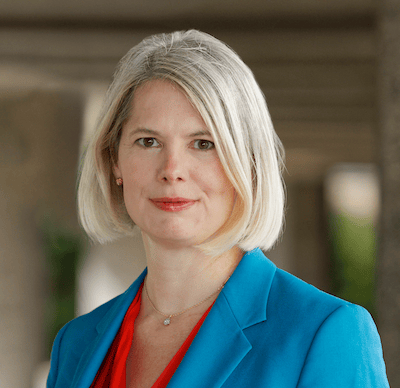
Gina Neff
Board Member
Melissa Nobles (Executive Committee) is Chancellor and Professor of Political Science at the Massachusetts Institute of Technology. Nobles’ research and teaching have focused on the comparative study of racial and ethnic politics and issues of retrospective justice. Her current research centers on constructing a database of racial killings in the American South, 1930–1954. Working closely as a faculty collaborator and advisory board member of Northeastern Law School’s Civil Rights and Restorative Justice law clinic, Nobles has conducted extensive archival research, unearthing understudied and, more often, unknown deaths and contributing to legal investigations. She is the author of two books, Shades of Citizenship: Race and the Census in Modern Politics (Stanford University Press, 2000) and The Politics of Official Apologies (Cambridge University Press, 2008), and coeditor with Jun-Hyeok Kwak of Inherited Responsibility and Historical Reconciliation in East Asia (Routledge Press, 2013). Her scholarship has also appeared in the Annual Review of Political Science, Daedalus, American Journal of Public Health, and several edited books. Nobles is a graduate of Brown University where she majored in history. She received her MA and PhD in political science from Yale University. Nobles has held fellowships at Boston University’s Institute for Race and Social Division and Harvard University’s Radcliffe Center for Advanced Study. She has served on the editorial boards of Polity, American Political Science Review, and Perspectives on Politics journals. Nobles has also been involved in faculty governance at MIT and beyond, serving as the associate chair of the MIT Faculty from 2007–2009 and vice-president of the American Political Science Association, 2013–14.

Melissa Nobles
Board Member
Walter W. Powell (Executive Committee; Audit Committee) is the Jacks Family Professor of Education, and (by courtesy) Professor of Sociology, Organizational Behavior, Management Science and Engineering, and Communication at Stanford University. He has been a faculty codirector of the Stanford Center on Philanthropy and Civil Society since it was founded in 2006 and currently shares the Marc and Laura Andreessen Codirector chair. He has received honorary degrees from Uppsala University, Sweden; Copenhagen Business School, Denmark; and Aalto University, Finland, and is a foreign member of the Swedish Royal Academy of Science and The British Academy. He has served on the board of directors of the Social Science Research Council since 2000. He is also an external faculty member of the Santa Fe Institute. His interests focus on the processes through which ideas and practices are transferred across organizations and the role of networks in facilitating or hindering innovation.

Walter Powell
Board Member
Raka Ray has a bachelor’s degree from Bryn Mawr College (1985) and a PhD from the University of Wisconsin-Madison (1993). She is the Dean of the Social Sciences and a professor of sociology and South and Southeast Asia studies at the University of California, Berkeley. Recipient of the 2023 Jessie Bernard Award, a lifetime achievement award for feminist research and mentoring from the American Sociological Association, she is the former chair of the Institute of South Asia Studies (2003–2012), the Department of Sociology (2012–2015), and the Academic Senate Committee on Budget and Interdepartmental Relations. Ray is much in demand as a speaker on issues ranging from gender and feminist theory, postcolonial sociology, contemporary politics in the US and India, and her current project on the transformations in gender wrought by the decline of traditional fields of work for men. Ray’s publications include Fields of Protest: Women’s Movements in India (University of Minnesota Press, 1999; and in India, Kali for Women, 2000), Social Movements in India: Poverty, Power, and Politics, co-edited with Mary Katzenstein (Rowman and Littlefeld, 2005), Cultures of Servitude: Modernity, Domesticity and Class in India, with Seemin Qayum (Stanford, 2009), The Handbook of Gender (OUP India, 2011), Both Elite and Everyman: The Cultural Politics of the Indian Middle Classes, co-edited with Amita Baviskar (Routledge, 2011), The Social Life of Gender (Sage, 2017) co-edited with Jennifer Carlson and Abigail Andrews, and many articles and op-ed

Raka Ray
Board Member
Til Schuermann (Treasurer; Audit Committee) is partner and cohead of Risk & Public Policy practice for the Americas at Oliver Wyman. He advises private and public sector clients on stress testing, enterprise-wide risk management, climate risk and governance including board effectiveness, crisis management, and macroeconomic risk. He previously served as senior vice president at the Federal Reserve Bank of New York, where he held numerous positions, including head of Financial Intermediation in Research and head of Credit Risk in Bank Supervision. Schuermann started his career at Bell Labs. He sits on the FRM exam committee for the Global Association of Risk Professionals and on the board of Corridor Platforms, a fintech. He is an associate editor of the Journal of Financial Services Research and the Journal of Risk, and is on the editorial board of the Journal of Risk Management in Financial Institutions. Schuermann has a PhD in economics from the University of Pennsylvania and a BA in economics from the University of California, Berkeley.

Til Schuermann
Board Member
Joseph Schull (Chair, Investment Committee) is the founder, managing partner, and chairman of the Investment Committee of Corten Capital and a longstanding investor in the technology, media, and telecommunications (TMT) sector, across early stage, development capital, and leveraged buyout investments. Having joined Warburg Pincus (WP), one of the world’s leading private equity firms, in 1998, Schull led the firm’s TMT group in Europe as well as its investment activities in Emerging Europe. He has led growth and buyout investments in B2B software and technology-enabled services, information ser- vices, cable broadband services, and digital media. He also served as WP’s head of Europe and was a member of the firm’s global Executive Management Group. Schull holds a BA and MA from McGill University, where he studied politics, philosophy, and economics and was a Guy Drummond Scholar, and he received a DPhil from Oxford University, where he was a University Lecturer during 1990–1991. He is a Board member of the Social Science Research Council and a member of the International Advisory Board of McGill University. He was born in Montreal, Canada, and lives in London, UK. Joseph holds a B.A. and M.A. from McGill University, where he studied Politics, Philosophy and Economics and was a Guy Drummond Scholar, and he received a D. Phil from Oxford University, where he was a University Lecturer during 1990-1991. He is Chair of the Investment Committee of venture philanthropy organisation Impetus Trust, a Board member of the Social Science Research Council, and a member of the International Advisory Board of McGill University. He was born in Montreal, Canada and lives in London, UK.

Joseph Schull
Board Member
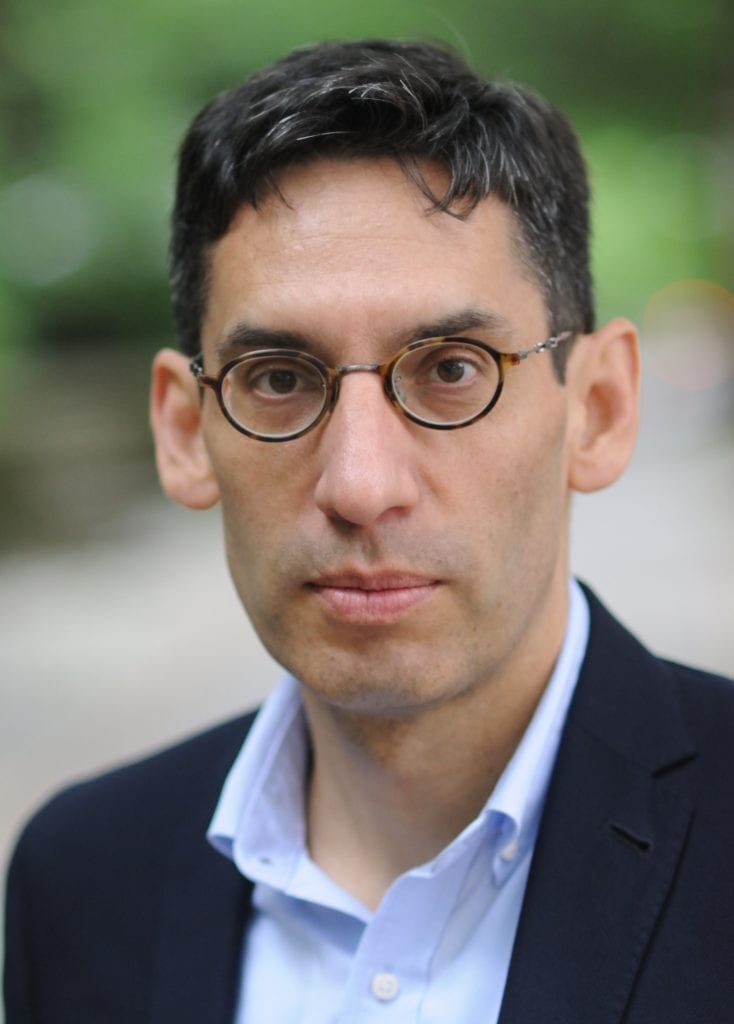
Miguel Urquiola is Dean of Social Science and Professor of Economics at Columbia University. He has chaired Columbia’s Department of Economics and its Committee on the Economics of Education. He is also a member of the School of International and Public Affairs (SIPA). Outside Columbia, Urquiola is a Research Associate at the National Bureau of Economic Research (NBER) and has held appointments at Cornell University, the World Bank, the Bolivian Catholic University, and the Bolivian government. Urquiola’s research is on the Economics of Education. Its focus is on understanding how schools and universities compete, and how educational markets differ from other markets economists study. He has written numerous journal articles on these issues, and a book on why American universities excel at research: Markets, Minds, and Money. Urquiola holds a PhD in Economics from the University of California, Berkeley and a BA from Swarthmore College.
Miguel Urquiola
Board Member
Sherry Glied is Dean of New York University’s Robert F. Wagner Graduate School of Public Service. From 1989-2013, she was Professor of Health Policy and Management at Columbia University’s Mailman School of Public Health. She was Chair of the Department of Health Policy and Management from 1998-2009. On June 22, 2010, Glied was confirmed by the U.S. Senate as Assistant Secretary for Planning and Evaluation at the Department of Health and Human Services, and served in that capacity from July 2010 through August 2012. She had previously served as Senior Economist for health care and labor market policy on the President’s Council of Economic Advisers in 1992-1993, under Presidents Bush and Clinton, and participated in the Clinton Health Care Task Force. She has been elected to the National Academy of Medicine, the American Academy of Arts and Sciences, the National Academy of Social Insurance, and served as a member of the Commission on Evidence-Based Policymaking. She is the 2021 recipient of the AUPHA William B. Graham Prize for Health Services Research. In November 2023, Governor Hochul selected her as Chair of the New York State Commission on the Future of Health Care, with the goal of ensuring access to high-quality, equitable care for all New Yorkers.
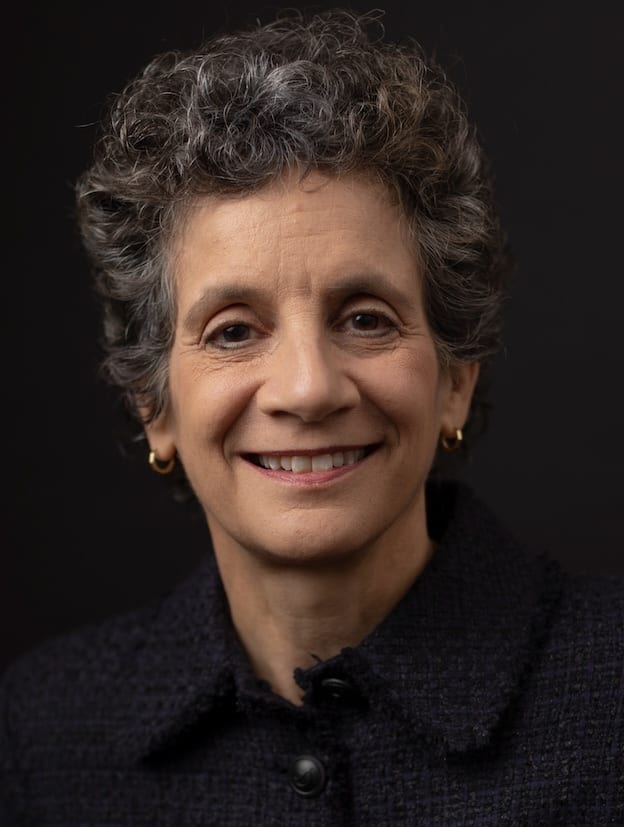
Sherry Glied
Board Member
Aaron “Ronnie” Chatterji, Ph.D. is the Mark Burgess & Lisa Benson-Burgess Distinguished Professor of Business and Public Policy at Duke University. His award-winning research is on entrepreneurship, innovation and the role of business and society. He most recently held senior economic policy positions in the Biden Administration. Chatterji served as the White House CHIPS coordinator, overseeing the implementation of the $52 billion CHIPS and Science Act, one of the largest industrial policy initiatives in a generation. He received his Ph.D. from the Haas School of Business at the University of California at Berkeley and his B.A. in Economics from Cornell University.

Aaron “Ronnie” Chatterji
Board Member